
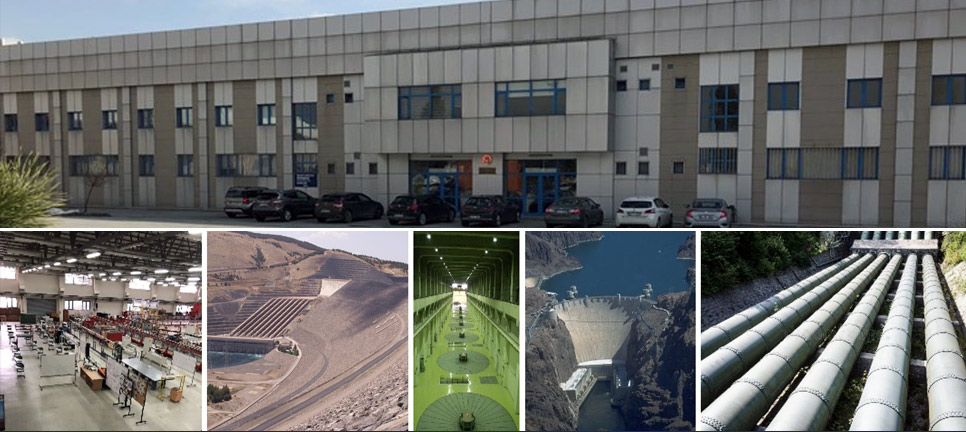
About the Program
Hydraulic engineering is a scientific discipline that focuses on the movement and cycle of water, aiming to make the best use of water resources and protect against potential harm, while also working to prevent and resolve the damage that complex natural disasters—such as droughts and floods—can cause to the environment. It is also a multidisciplinary field within Civil Engineering that focuses on the proper planning, design, and management of water resources by addressing various issues caused by human activities in river basins.
Its areas of study include water structures, surface water resource planning and management, infrastructure systems, flood and drought analysis, hydroelectric power, research on climate change and its effects, and sediment transport. Within the field of hydraulics, there are sub-disciplines such as Hydrology, Hydromechanics, and Water Resources Engineering. In addition, it is closely related to other disciplines such as meteorology, ecology, landscape architecture, and agricultural and urban planning.
In the Hydraulics department, in addition to physical and mathematical modeling studies, numerous research projects have been and continue to be carried out for national institutions such as BAP, TÜBİTAK, DSİ, İSKİ, and local governments, as well as international support programs like NATO and the EU Framework Programs, utilizing various advanced CAD, mapping, and GIS systems and software.
Areas of study include water transmission lines, urban water networks, wastewater and stormwater management, irrigation and drainage, river regulation, flood control, water structures, flood and drought analysis, and river basin management. In planning and design, environmental impacts such as earthquakes, wind, floods, and sediment transport are addressed by taking into account parameters such as urban and regional planning, transportation, population movement, and the economy. Hydraulic engineers use scientific principles, mathematical models, and engineering techniques in combination to examine and mitigate the effects of these processes.
Today, the necessity of sustainable water management has been incorporated into the framework programs of both the European Union and the United Nations. As an interdisciplinary field, hydraulic engineering is also seeking joint solutions with other disciplines to address droughts and flash floods in river basins caused by global climate change. This underscores the critical importance of water resources—which are vital for all living things—and highlights how they impact humanity, infrastructure, food sources, and trade. In addition to all this, a significant portion of the renewable energy sources that will replace fossil fuels consists of hydroelectric facilities to be built on rivers. For this reason, research and development activities aimed at advancing the design of hydroelectric structures to be built on rivers are also continuing intensively. Consequently, there is a need for engineers and scientists trained at the national and international levels in all these fields.
The Master’s Program in Hydraulic Engineering began offering education and instruction in 1982 under the name “Water and Environment.” Later, the Environmental component was separated, and the program evolved into the Master’s Program in Hydraulic Engineering. The program has produced a large number of graduates, who have entered the workforce at both the national and international levels. Some graduates have continued their careers in academia, while others have taken on roles as senior engineers in the public and private sectors. The Hydraulics program, which is part of the Department of Civil Engineering, is supported by a sufficiently large and specialized academic and administrative staff.
The Master’s Program in Hydraulics aims to train technical professionals and academics capable of addressing the needs outlined above. Graduates of the program will have opportunities to find employment and provide consulting services at national or international companies and public institutions engaged in planning, design, and operation—primarily in academia, but also in areas such as urban infrastructure, river structures, flood control, agricultural irrigation, and drainage.
Department Chair
Prof. Dr. Bilge Doran
Email: doran@yildiz.edu.tr
Work Phone: 0212-3835130
Program Director
Prof. Dr. Havva Anıl Güner
Email: aari@yildiz.edu.tr
Work Phone: 0212-3832933
Vision
The Master’s Program in Hydraulics aims to become a global leader in education, research, and innovation in the field of hydraulics and water resources. Its goal is to train expert engineers who plan and manage water resources and develop sustainable solutions that adhere to the principles of use and conservation.
Mission
The mission of the Master’s Program in Hydraulics is to educate students through problem-solving and innovative research initiatives in the planning and management of hydraulics and water resources. It is to maintain a comprehensive curriculum that teaches up-to-date, nature-friendly solutions to problems in hydraulics and water resources.
Educational Objectives
EA1. Works
in management or operational roles at national and international private-sector or public institutions EA2. Contributes
to scientific and technological research at national and international research and development institutions or industrial organizations EA3. Pursue
doctoral-level education at universities in Türkiye or abroad. EA4. Serve as an academic at state or foundation universities.
Faculty
| Faculty Member's First and Last Name | Academic Title | Research Areas |
| Yalçın Yüksel | Prof. Dr. | https://avesis.yildiz.edu.tr/yuksel |
| Hayrullah Ağaçcıoğlu | Prof. Dr. | https://avesis.yildiz.edu.tr/agacci |
| Esin Çevik | Prof. Dr. | https://avesis.yildiz.edu.tr/cevik |
| Berna Aydoğan | Prof. Dr. | https://avesis.yildiz.edu.tr/bayat |
| H. Anıl GÜNER | Prof. Dr. | https://avesis.yildiz.edu.tr/aari |
| Mehmet ÖZTÜRK | Prof. Dr. | https://avesis.yildiz.edu.tr/meozturk |
| Cihan ŞAHİN | Assoc. Prof. Dr. | https://avesis.yildiz.edu.tr/cisahin |
| Yeşim ÇELİKOĞLU | Associate Professor, Ph.D. | https://avesis.yildiz.edu.tr/ycelik |
| Eyüp Şişman | Associate Professor, Ph.D. | https://avesis.yildiz.edu.tr/esisman |
| Ayhan Gazioğlu | Dr. | https://avesis.yildiz.edu.tr/gazioglu |
| Tuba Bostan | Dr. | https://avesis.yildiz.edu.tr/bostan |
Course Plan
To earn a Master’s degree in Hydraulics, the program consists of at least seven courses totaling no fewer than twenty-one credits, the “Seminar” course, the “Research Methods and Scientific Ethics” course, the “Specialization Course,” and a thesis. The “Seminar” course and the thesis are non-credit courses and are graded as pass or fail. The “Specialization Course” is worth 3 credits and is graded as pass or fail. During their Master’s studies, students must take at least five of their total courses from those defined in the Hydraulics program. At least four of these courses must be selected from the required courses other than “Research Methods and Scientific Ethics.” Students may take courses from other graduate programs, provided they are recommended by their thesis advisor and are consistent with their thesis topic. Students newly enrolled in the Master’s program initially select their courses under the guidance of the Program Director; however, once they have selected a thesis advisor by the second semester at the latest, they select their subsequent courses in consultation with their thesis advisor.
Laboratory Facilities
Operating within the Faculty of Civil Engineering on a total area of 5,000 m², the Hydraulics and Coastal-Port Engineering Laboratory provides services to students and faculty members for research and educational activities, as well as it also supports university-industry collaborations in accordance with the revolving fund regulations.
Our Graduates, Their Employers, Theses, and Outputs
The institutions where our students who graduated in the field of Hydraulics over the past five years—having completed their theses—are currently employed, in line with the educational objectives of our program, are listed below. You can also view the number of theses, as well as the articles, conference papers, and patents resulting from these theses, in the same table. (Coming soon)
Our External Stakeholders and Advisory Board